
For the first time, the rupee declined to the low level of 80 against the US dollar in intra-day spot trading on Monday before ending the session 16 paise lower at 79.98 amid a surge in crude oil prices and unrelenting foreign fund outflows. At the interbank forex market, the local unit opened at 79.76 against the greenback but lost ground to touch the psychological low mark of 80 against the American currency. The local unit clawed back some lost ground and closed at 79.98, registering a fall of 16 paise over its previous close.
This would be done either through strategic sale or initial public offering, ADAG chairman Anil Ambani told shareholders at the company's annual general meeting in Mumbai.
Anil Ambani group flagship Reliance Communications on Friday entered the elite club of companies with Rs 1 trillion market value on the back of robust quarterly results, joining the likes of ONGC and Reliance.

Bharti Airtel was the top gainer in the Sensex pack, rising around 4 per cent, followed by Tech Mahindra, HDFC, Kotak Bank, M&M and HCL Tech. NSE Nifty advanced 21.85 points to 16,280.10.

Currently, TCS is India's second most valuable firm after Reliance Industries, which has a market cap of nearly Rs 12.9 trillion.
Anil Ambani Group firm Reliance Capital has initiated the process of divesting up to 26 per cent stake in its life insurance subsidiary and is mulling options like bringing in a strategic foreign investor and an initial public offer. The company, which has been going solo so far, has decided on this divestment at this point of time because it will give a better shareholder value, besides sentiments in the market is also looking bright.
Mukesh Ambani-led Reliance Industries on Thursday became the first Indian company to attain the market capitalisation of Rs 4 trillion (over $100 billion) after a 4.26 per cent surge in its share prices. The share prices of country's most valued firm rose by Rs 114.7 to a life-time high of Rs 2805, pushing the company's market capitalisation to Rs 4,07,748.82 crore ($103 billion).
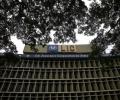
The IPO-bound national insurer LIC is not only the largest holder of government debt -- owning 19 per cent of the G-secs -- but also the single largest owner of equities, the largest fund manger as well as holder of household savings, dwarfing even SBI deposits, as per a report. Holding 17 per cent of the over Rs 80.7 lakh crore dated government securities, maturing by 2061, the Reserve Bank is the second largest holder of government debt, while led by public sector banks, commercial banks collectively own around 40 percent. Other insurers cumulatively own only 5 per cent.
While those accustomed to the stock market lingo can easily understand what market cap and stock split mean, a few of my young friends were completely at large when they heard about them.
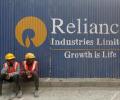
Since August 9, RIL shares have gone up by over 11 per cent.

So which sectors are likely to do well in 2022? Should you focus on domestic economy-related sectors or export-oriented ones?

Omkeshwar Singh, Head, Rank MF, a mutual fund investment platform, answers your queries.

Oil-to-telecom conglomerate Reliance Industries (RIL) has emerged as the country's largest wealth creator, adding a staggering Rs 9.6 trillion over the past five years, according to Motilal Oswal's 26th Annual Wealth Creation Study. In doing so, the Mukesh Ambani-led company has beaten its own record of Rs 5.6 trillion generated in 2014-19. The study covered financial year 2015-16 (FY16) to FY21 and ranks the top 100 companies in descending order of absolute wealth created, subject to the company's stock price outperforming the BSE Sensex. The firms were also ranked according to speed (price CAGR during the period).
Mills & Boon has launched its own publishing operation in Mumbai in the expectation that India will rapidly become the world's largest market for romantic fiction outside North America.
Investment guru and mutual fund expert Ashok Kumar, answers all your MF related queries.

Power generating companies (gencos) that use imported coal to produce electricity, may find it difficult to switch on their idle units immediately in the wake of high fuel costs, several players have told Business Standard. Recently, the Union power ministry had invoked Section 11 of the Electricity Act mandating all imported coal-based plants to generate power at full capacity. However, some generating companies that use imported coal, argue that it is simply unviable for them to produce power when the price of coal in the international market is high, while the per-unit price of power has been capped at Rs 12 per unit on the domestic power exchange.
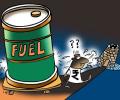
The windfall tax on oil produced within India and fuel exported overseas will make up for more than three-fourths of the revenue that the government lost when it cut excise duty on petrol and diesel to cool soaring inflation, industry sources said. India on July 1 joined a select league of nations globally that have taxed windfall gains accruing to oil companies from soaring energy prices. The government slapped a Rs 6 per litre tax on the export of petrol and jet fuel (ATF) and Rs 13 a litre on the export of diesel effective July 1. Additionally, a Rs 23,250 per tonne tax was levied on crude oil produced domestically.

Ajit Mishra, vice president, research, Religare Broking, answers your queries.

FutureBrand, which is a global brand transformation company, said part of Reliance's success could be attributed to Mukesh Ambani's recasting of the firm as a one-stop-shop for Indians.
The Anil Dhirubhai Ambani Group, which is raising Rs 11,700 crore through the public offer of Reliance Power, has seen a value erosion of Rs 48,000 crore in the last seven days.
Omkeshwar Singh, Head, Rank MF, a mutual fund investment platform, answers your queries.

ONGC was the top loser in the Sensex pack, shedding around 5 per cent, followed by SBI, Axis Bank, ICICI Bank, Bajaj Auto and Maruti. On the other hand, IndusInd Bank, HUL, Dr Reddy's, NTPC and Reliance Industries were among the gainers.

Omkeshwar Singh, Head, Rank MF, a mutual fund investment platform, will answer your queries.
Omkeshwar Singh, Head, Rank MF, a mutual fund investment platform, answers your queries.

SBI was the top laggard in the Sensex pack, tumbling around 5 per cent, followed by Axis Bank, ICICI Bank, UltraTech Cement, Bajaj Finance, HDFC Bank and Bharti Airtel. On the other hand, PowerGrid, ITC, NTPC, Tata Steel and Titan were among the gainers.

We do not expect any major price action at SBI counter as the swap ratio being largely neutral
Mukesh Ambani on Monday became the first Indian to head a group of companies with a combined market value of over Rs 5 trillion, while his group's flagship Reliance Industries became the country's first firm crossing the capitalisation of Rs 4 trillion. RIL's share price soared above 5 per cent to close at Rs 2,827, taking its market capitalisation to Rs 4,11,041.95 crore (nearly $104.22 billion).

Wondering if mutual fund investments can earn you enough money for your retirement and child's marriage? Omkeshwar Singh, Head, Rank MF, a mutual fund investment platform, answers your queries.

Bharti Airtel was the top gainer in the Sensex pack, rallying around 4 per cent, followed by Bajaj Auto, TCS, Titan, HCL Tech and Reliance Industries. On the other hand, IndusInd Bank, Tata Steel and HDFC Bank were among the laggards.
'With the ease of access, we have seen an increased participation from tier-2, tier-3, and tier-4 cities/towns.'

Reliance Industries was the biggest loser in the Sensex pack, falling 2.62 per cent, followed by Nestle India, IndusInd Bank, UltraTech Cement, M&M and SBI.

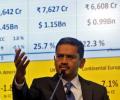
The IT major is followed by RIL (Rs 795,628.55 crore), HDFC Bank (Rs 624,362.11 crore), Hindustan Unilever (Rs 367,880.69 crore) and ITC (Rs 367,513.78 crore).

Dalal Street investors became richer by more than Rs 16.36 lakh crore this year as the equity market scaled new highs despite persistent geopolitical uncertainties and inflation worries. Analysts attributed better macroeconomic fundamentals, the confidence of retail investors and foreign investors investing again in the domestic equities towards the latter half of 2022 as the key factors that led to the outperformance of the Indian market in comparison to many other stock markets worldwide. During the initial part of the year, markets were jolted by the Russia-Ukraine war.

Bajaj Finance was the top laggard in the Sensex pack, dropping over 9 per cent, followed by Axis Bank, IndusInd Bank, HDFC, ICICI Bank and M&M. Reliance Industries, however, capped the losses by rallying over 3 per cent. Sun Pharma, Hero MotoCorp, L&T, PowerGrid and Bajaj Auto were also among the gainers.
HDFC Bank, Reliance Industries and Housing Development Finance Corporation (HDFC) -- with free-float market cap of over Rs 3 trillion -- have the highest weight in the Sensex and the Nifty.
Anil Dhirubhai Ambani Group's market capitalisation increased to Rs 86,000 crore (Rs 860 billion) following the listing of the group company -- Reliance Communication Ventures Ltd (RCoVL).
